Health Insurance vs Paying Out of Pocket. Gemini ai Black and white
In India healthcare costs are rising at an alarming rate with hospital bills for even minor surgeries or treatments crossing lakhs of rupees and in such a scenario one of the biggest financial decisions individuals and families face is whether to rely on health insurance or continue paying medical bills out of pocket and while many people think avoiding insurance saves money because they do not have to pay premiums every year the reality is far more complex because one major medical emergency can wipe out years of savings and push families into debt whereas health insurance provides financial protection, peace of mind, and access to better healthcare facilities without the stress of arranging funds at the last minute, and the fundamental difference lies in the approach where paying out of pocket means directly using savings or loans for every medical need while health insurance means transferring that
financial risk to an insurer in exchange for an annual premium which is relatively small compared to the potential costs of hospitalization, and for example a young family might pay ₹15,000 per year for a ₹10 lakh coverage plan which sounds like an extra expense but if even a single hospitalization worth ₹3–₹5 lakh occurs the insurance saves multiples of the premium paid and this highlights why financial
planners insist health insurance should be the foundation of any risk management strategy, and modern policies also cover pre and post hospitalization expenses, ambulance charges, daycare procedures, critical illnesses, and even preventive checkups making them much more comprehensive than older plans, while people who depend on out-of-pocket expenses often delay treatments, compromise on hospital choices, or fall into high-interest
debt through personal loans and credit cards which creates a long-term financial burden, and another important factor is inflation in medical expenses which averages around 10–12% annually in India meaning a surgery that costs ₹2 lakh today may cost ₹5–6 lakh in the next decade and unless one’s income or savings grow at the same pace it becomes extremely difficult to handle without insurance, and tax benefits under Section 80D further make health insurance attractive
as premiums up to ₹25,000 for individuals and up to ₹50,000 for senior citizens can be deducted from taxable income reducing overall tax liability, and one must also understand that group insurance provided by employers while useful may not be sufficient in terms of coverage amount and it ends as soon as one leaves the job so buying a personal health insurance policy early in life ensures continuity and lower premiums,
and while critics argue that insurance companies reject claims or delay processes the claim settlement ratio and digital cashless networks have improved significantly in recent years with leading insurers like HDFC ERGO, ICICI Lombard, Max Bupa, Star Health, and New India Assurance offering extensive hospital networks and quick approvals, and the smart approach is to carefully read policy terms choose adequate coverage based on family size and lifestyle, and include
add-ons like maternity cover, critical illness cover, or top-up plans to expand protection at a low cost, and ultimately the decision between health insurance and out-of-pocket expenses boils down to whether one prefers predictable small premiums or unpredictable large medical shocks, and logically insurance offers stability because it converts uncertain catastrophic expenses into manageable
predictable payments while allowing savings and investments to remain untouched for other goals like education, home buying, or retirement, and in conclusion health insurance is not just a financial product but a safety net that shields families from healthcare inflation, unexpected emergencies, and financial distress making it a smarter and more sustainable choice than relying solely on out-of-pocket spending which exposes individuals to the risk of wiping out hard-earned savings in a single medical event.
Prompt 1
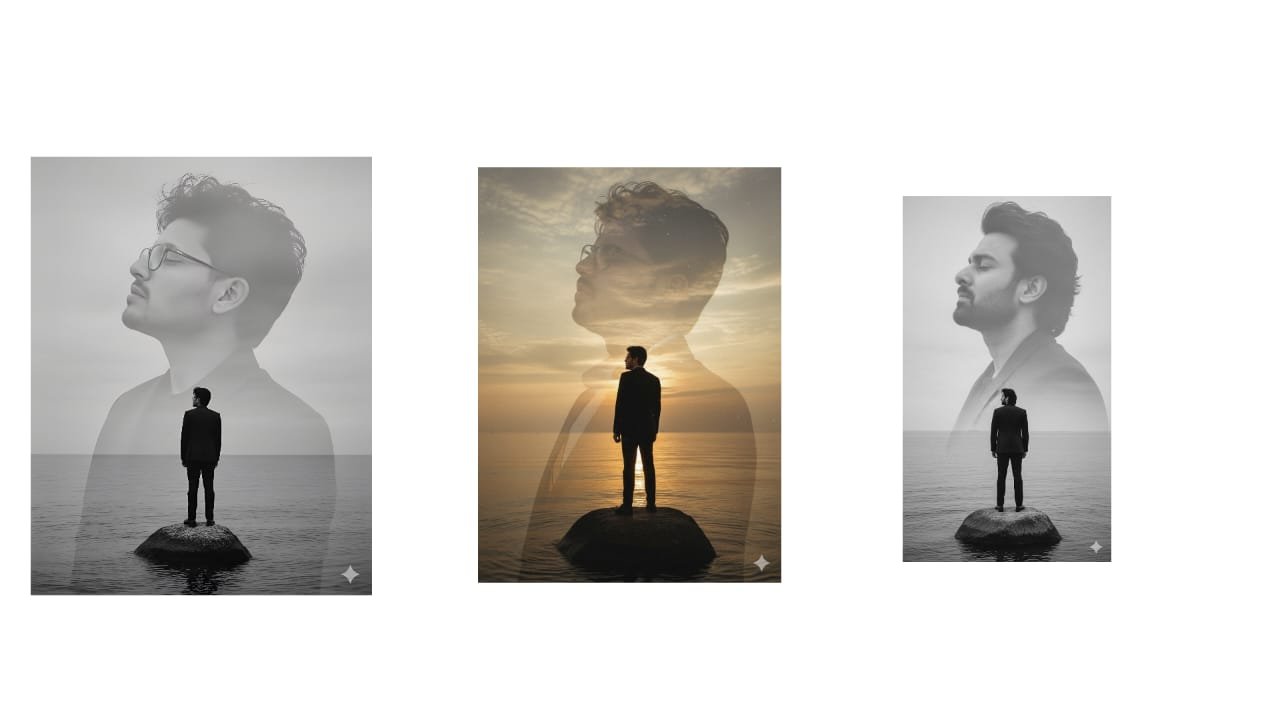
A double exposure composition in black and white. In the foreground, a man (like the man in this photo—realistic) is standing with his back to the camera, his head turned to the left, gazing at the horizon. He is wearing a black blazer and pants ensemble, and is standing on a rock in a body of water (sea, lagoon, or lake). Continuation: In the background, in an overlapping and translucent silhouette, the profile of the same man’s face appears with his eyes closedand head raised, his hair slightly tousled downward. The setting is a cloudy or overcast day, with the horizon of the sea or water stretching out. The lighting is diffuse, creating a melancholic and artistic atmosphere. The image has a vintage, grainy, and artistic touch. Face matching
Prompt 2
A double exposure composition in sunrise. In the foreground, a man (like the man in this photo—realistic) is standing with his back to the camera, his head turned to the left, gazing at the horizon. He is wearing a black blazer and pants ensemble, and is standing on a rock in a body of water (sea, lagoon, or lake). Continuation: In the background, in an overlapping and translucent silhouette, the profile of the same man’s face appears with his eyes closedand head raised, his hair slightly tousled downward. The setting is a cloudy or overcast day, with the horizon of the sea or water stretching out. The lighting is diffuse, creating a melancholic and artistic atmosphere. The image has a vintage, grainy, and artistic touch. Face matching
Prompt 3
A double exposure composition in black and white. In the foreground, a man (like the man in this photo—realistic) is standing with his back to the camera, his head turned to the left, gazing at the horizon. He is wearing a same dress ensemble, and is standing on a rock in a body of water (sea, lagoon, or lake). Continuation: In the background, in an overlapping and translucent silhouette, the profile of the same man’s face appears with his eyes closedand head raised, his hair slightly tousled downward. The setting is a cloudy or overcast day, with the horizon of the sea or water stretching out. The lighting is diffuse, creating a melancholic and artistic atmosphere. The image has a vintage, grainy, and artistic touch. Face matching












Post Comment